Did you know that Jupiter’s immense gravity is so powerful that it influences the orbits of asteroids in the asteroid belt and even keeps comets from straying too close to the inner solar system? This colossal planet acts as a cosmic shield, protecting Earth and other inner planets from potential impacts, making it one of the most crucial players in our solar system’s dynamics.
Jupiter, the largest planet in our solar system, is a wonder of cosmic proportions. Its massive size and unique characteristics not only captivate astronomers but also hold key insights into the formation of our solar system. By exploring Jupiter’s atmospheric dynamics, magnetic field, and diverse moons, we can better understand planetary science and the conditions necessary for life. This article will take you on a journey through some of the most fascinating facts about Jupiter, illuminating its role as a giant in our celestial neighborhood.
The Gas Giant’s Unique Atmosphere and Composition
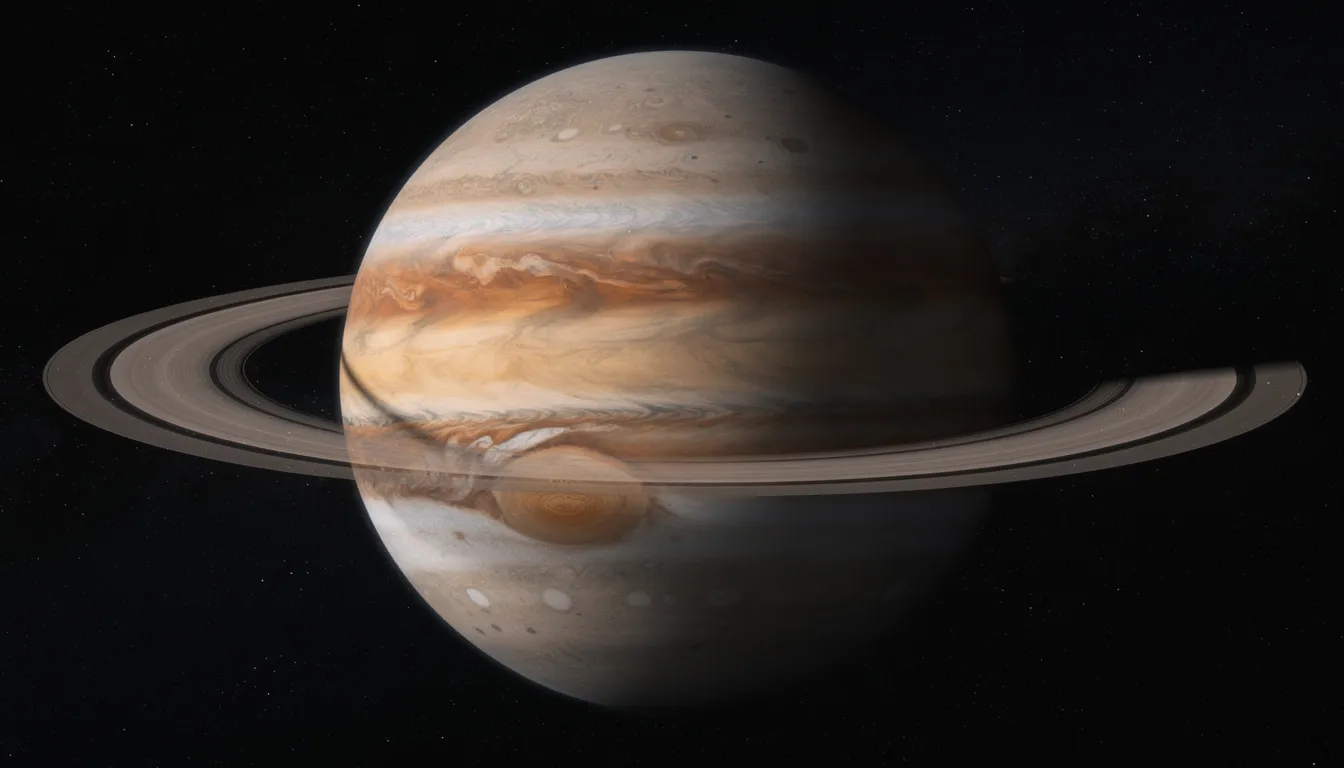
Jupiter’s Great Red Spot, a colossal storm larger than Earth, is one of the most captivating features of this gas giant. This persistent anticyclonic storm has been raging for at least 350 years, showcasing Jupiter’s dynamic weather systems. Winds within the Great Red Spot can reach speeds of up to 400 kilometers per hour (about 250 miles per hour), swirling in an intricate dance that highlights the planet’s turbulent atmosphere. The storm’s reddish hue is believed to be caused by complex chemical reactions involving solar ultraviolet radiation and the planet’s atmospheric compounds. As scientists study this massive storm, they gain insights not only into Jupiter’s atmosphere but also into the broader mechanics of planetary weather systems.
Unveiling Jupiter’s Mysterious Moons
Jupiter’s magnetic field is among the strongest in the solar system, over 20,000 times more powerful than Earth’s. This immense magnetic force generates intense radiation belts that can be hazardous to spacecraft. The field is produced by the motion of metallic hydrogen within Jupiter’s interior, which creates electric currents. Additionally, the interaction between this magnetic field and the solar wind leads to spectacular auroras at the planet’s poles, far more extensive than those seen on Earth. These auroras are a visual testament to Jupiter’s complex magnetic environment, showcasing the planet’s dynamic nature and its capacity to influence its surroundings.
Unraveling Jupiter’s Mysterious Magnetic Field
Jupiter’s magnetic field is one of the strongest in the solar system, approximately 20,000 times more powerful than Earth’s. This immense magnetic force is generated by the planet’s rapid rotation and its metallic hydrogen core, creating a vast magnetosphere that extends millions of kilometers into space. It not only shields Jupiter from solar winds but also captures charged particles, leading to intense radiation belts. This radiation environment poses challenges for spacecraft missions, making the study of Jupiter’s magnetic field crucial for understanding both the planet itself and the effects of magnetic fields on other celestial bodies. The interaction between the magnetosphere and the surrounding environment reveals much about the complex dynamics at play in gas giants.
Jupiter stands as a testament to the complexity and majesty of our solar system. Its immense size and powerful gravitational influence not only shape the orbits of nearby celestial bodies but also offer insights into planetary formation and evolution. As we continue to explore this gas giant, the knowledge we gain will deepen our understanding of not just Jupiter itself, but the broader dynamics of the universe. This remarkable planet serves as a reminder of the wonders that await us in the cosmos, encouraging further discovery and exploration.
Q: What is Jupiter’s size compared to other planets in our solar system?
A: Jupiter is the largest planet in our solar system, with a size that exceeds all other planets combined.
Q: What are the main components of Jupiter’s atmosphere?
A: Jupiter’s atmosphere is primarily composed of hydrogen and helium.
Q: What is the Great Red Spot on Jupiter?
A: The Great Red Spot is a massive storm on Jupiter that has been raging for centuries, making it one of the planet’s most iconic features.
If you’re fascinated by the wonders of Jupiter, don’t stop here! Dive deeper into the mysteries of our solar system by exploring the latest research and missions aimed at uncovering the secrets of this gas giant. Discover how Jupiter’s unique features continue to influence our understanding of planetary science and the potential for life beyond Earth.
Sources
1. ESA – Facts about Jupiter
2. Jupiter Facts
3. Fakta-fakta Menarik Tentang Planet Jupiter – Info Astronomy
4. Planet Yupiter: Serba Serbi, Ciri-Ciri, dan Fun Fact – Gramedia
5. Fakta Menarik Planet Jupiter: Raksasa Gas Terbesar di Tata Surya